
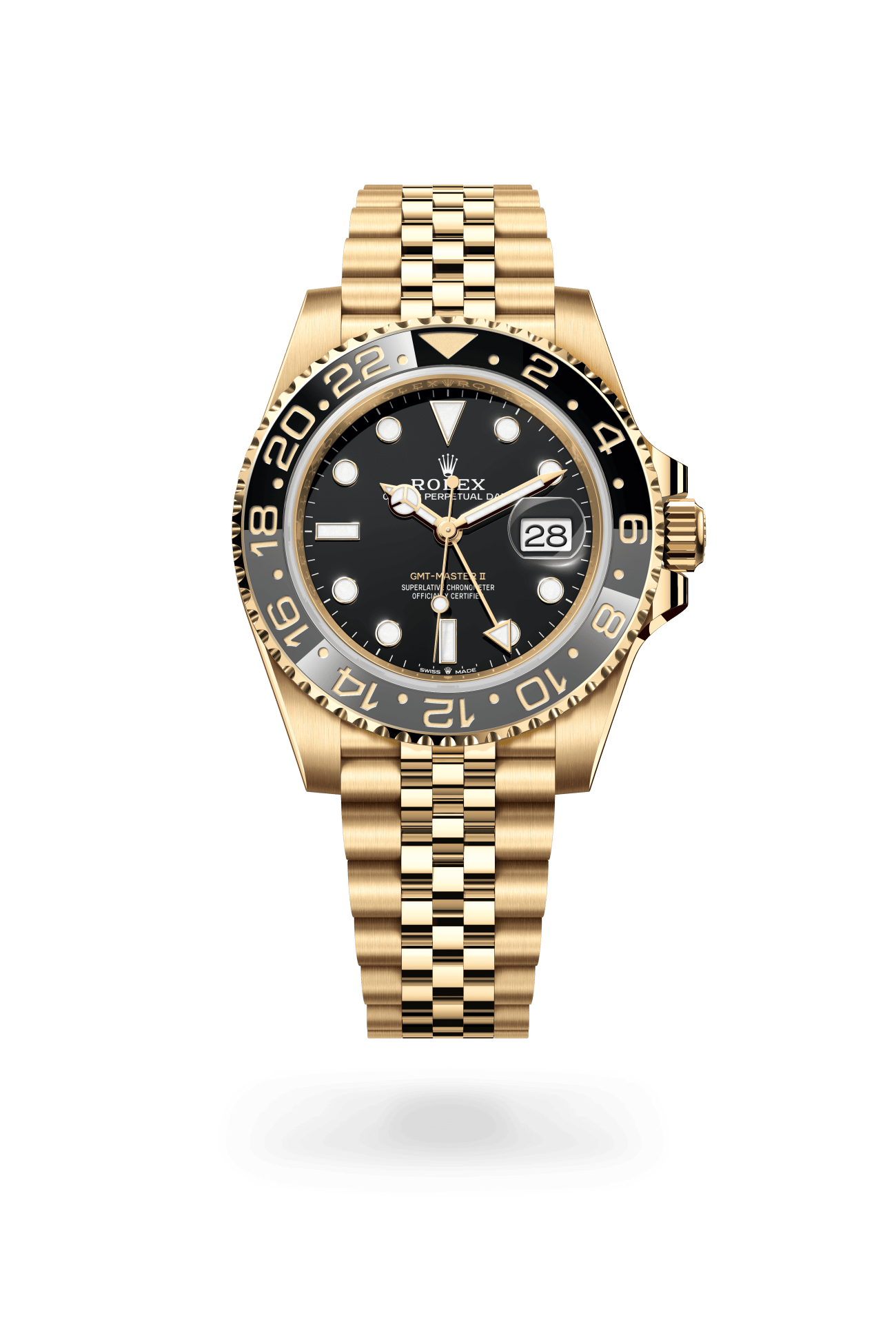
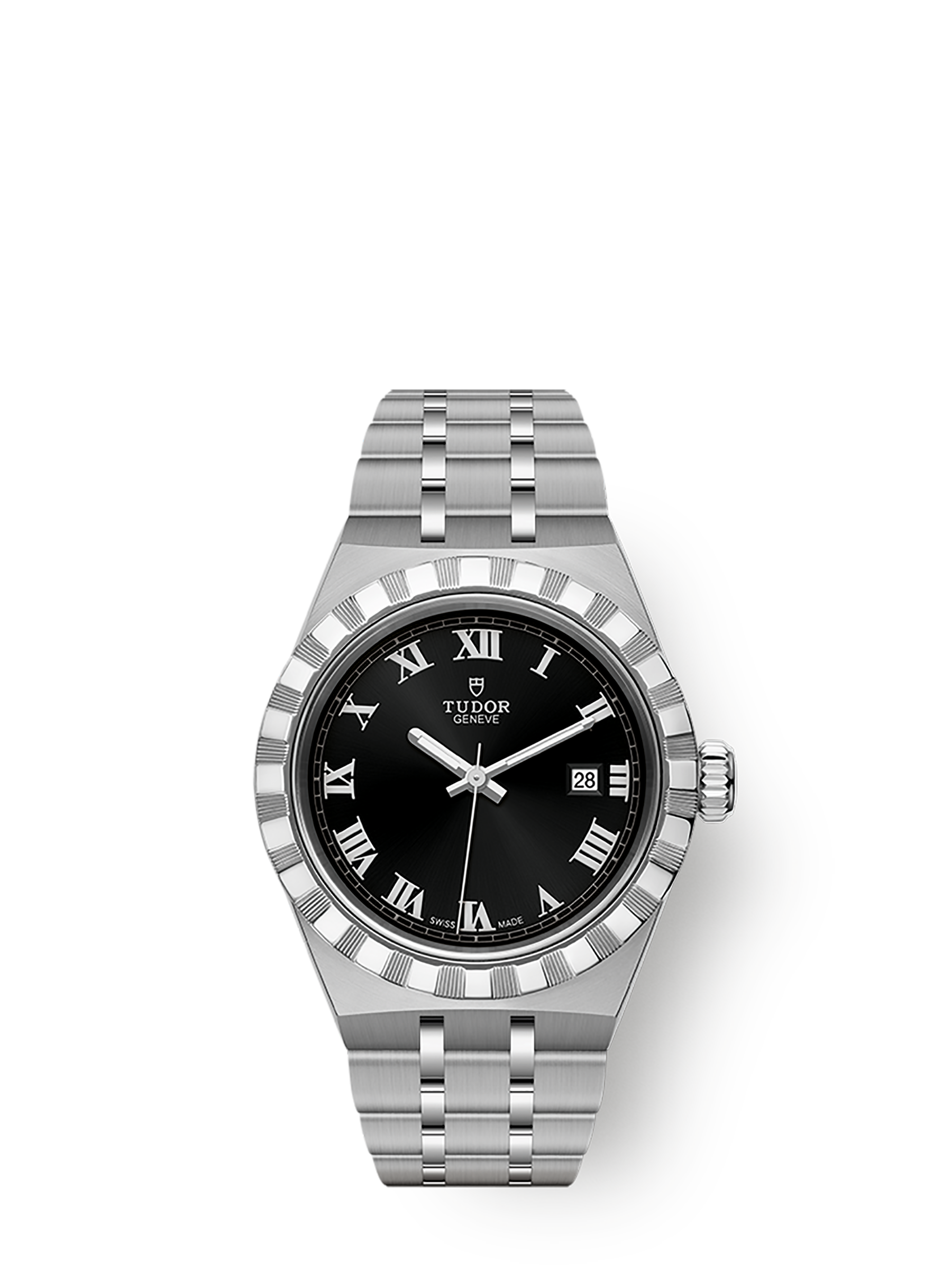
Rolex GMT-Master II vs Tudor Royal
Ref. M126718GRNR-0001 vs Ref. M28300-0003
The Rolex GMT-Master II and Tudor Royal represent one of the most compelling matchups in luxury watches — a sibling rivalry between two brands under the same parent company. With the Rolex GMT-Master II priced at $44,750 and the Tudor Royal at $2,650, the price gap raises a critical question: does the extra investment in the pricier option deliver proportional value? We break down the specs, market performance, and flip potential to help you decide.
Price Comparison
Rolex
GMT-Master II
Tudor
Royal
At retail, the Rolex GMT-Master II is listed at $44,750 while the Tudor Royal comes in at $2,650. The Tudor Royal comes in at $42,100 less — more than half the price difference — making it a significantly more accessible option. On the secondary market, the gap widens: the Rolex GMT-Master II trades around $67,125 and the Tudor Royal around $2,253, a difference of $64,872 favoring the Tudor Royal. This watch trades at 50% above retail on the secondary market and is trending upward — a strong indicator of collector demand. The Tudor Royal shows a more modest market premium of -15.0%, though currently trending downward. For investors, the Rolex GMT-Master II edges ahead with a flip potential score of 8/10 compared to 2/10.
Specifications
| Specification | Rolex GMT-Master II | Tudor Royal |
|---|---|---|
| Case Diameter | 40mm | 38mm |
| Case Thickness | 13.1mm | 10.5mm |
| Case Material | 18ct yellow gold | Stainless steel |
| Bezel | Cerachrom (ceramic) in green and black | Stainless steel with knurled edge |
| Crystal | Sapphire with Cyclops lens | Sapphire crystal |
| Water Resistance | 100m / 330ft | 100m / 330ft |
| Movement | Rolex calibre 3285 | Tudor Calibre T601 |
| Movement Type | Automatic | Automatic |
| Power Reserve | 70 hours | 38 hours |
| Bracelet/Strap | Jubilee, five-piece links in 18ct yellow gold | Stainless steel integrated bracelet |
| Clasp | Oysterclasp with Easylink 5mm comfort extension | Folding clasp with safety catch |
| Lug Width | 20mm | Integrated bracelet |
Key specification differences stand out between these two: the Rolex GMT-Master II offers longer power reserve at 70 hours, and the Rolex GMT-Master II uses 18ct yellow gold while the Tudor Royal opts for Stainless steel. With 7 notable spec differences in total, the choice depends on which features matter most to your use case.
Value Per Feature
Per millimeter of case diameter, the Rolex GMT-Master II costs $1,678 versus $59 for the Tudor Royal. For water resistance, the Tudor Royal delivers better value per meter of depth rating. The Tudor Royal offers more power reserve per dollar spent.
Which Should You Buy?
Choose the Rolex GMT-Master II if you value stronger flip potential, better value retention. Go with the Tudor Royal if you prioritize a lower entry price. For pure investment potential, the Rolex GMT-Master II has the edge based on current market data.
Frequently Asked Questions
Which is more affordable, the Rolex GMT-Master II or the Tudor Royal?
The Tudor Royal is more accessible, priced at $2,650 compared to $44,750.
Which watch is a better investment?
Based on current market data, the Rolex GMT-Master II has a higher flip potential score of 8/10, suggesting stronger investment returns. However, watch values can fluctuate based on market conditions.
Which holds its value better on the secondary market?
The Rolex GMT-Master II currently trades at 50.0% above retail, indicating strong value retention on the pre-owned market.
How do the Rolex GMT-Master II and Tudor Royal compare in size?
The Rolex GMT-Master II measures 40mm in diameter and 13.1mm thick, while the Tudor Royal is 38mm by 10.5mm.
What movements do these watches use?
The Rolex GMT-Master II uses the Rolex calibre 3285 with 70 hours power reserve, while the Tudor Royal runs on the Tudor Calibre T601 offering 38 hours of power reserve.