
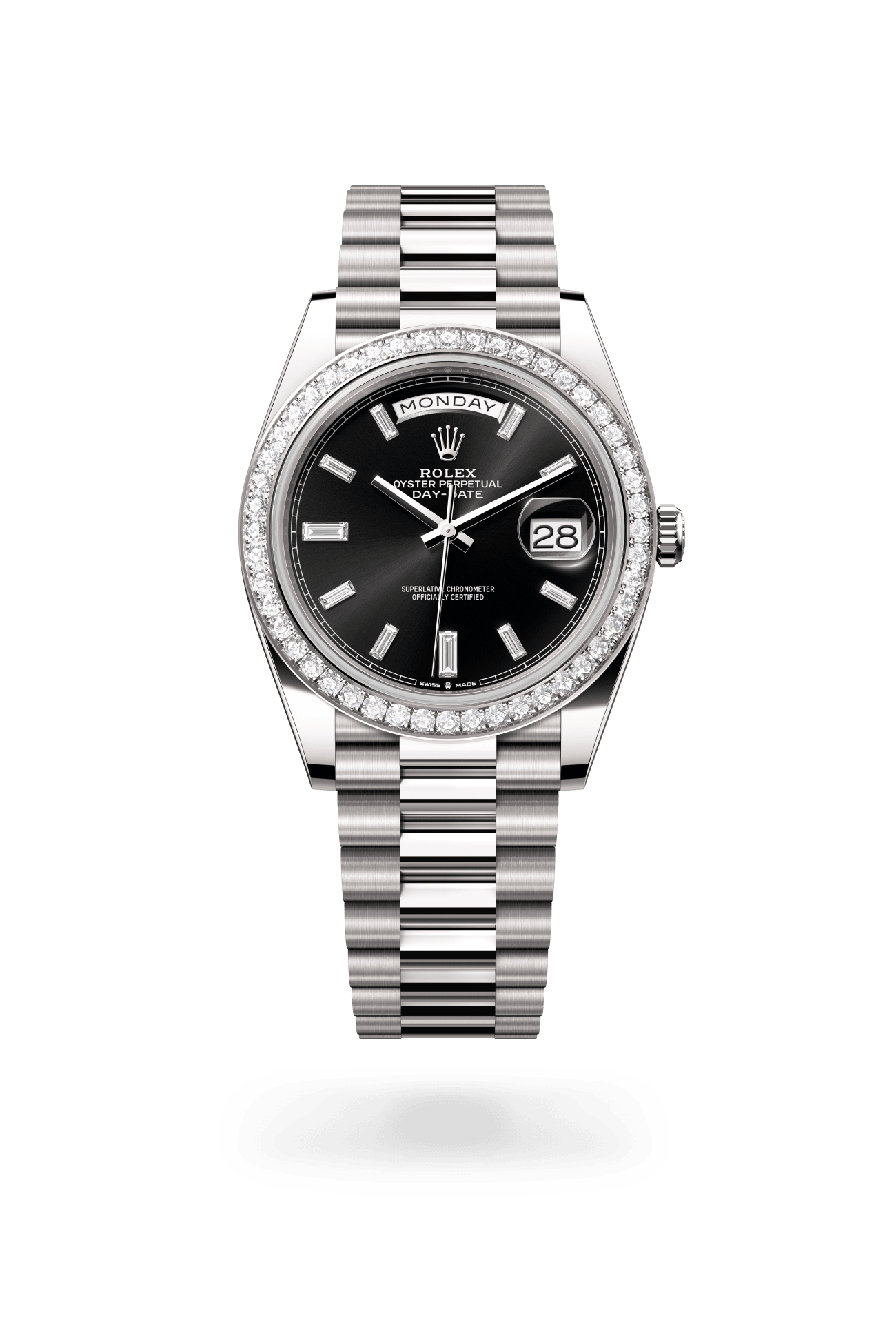
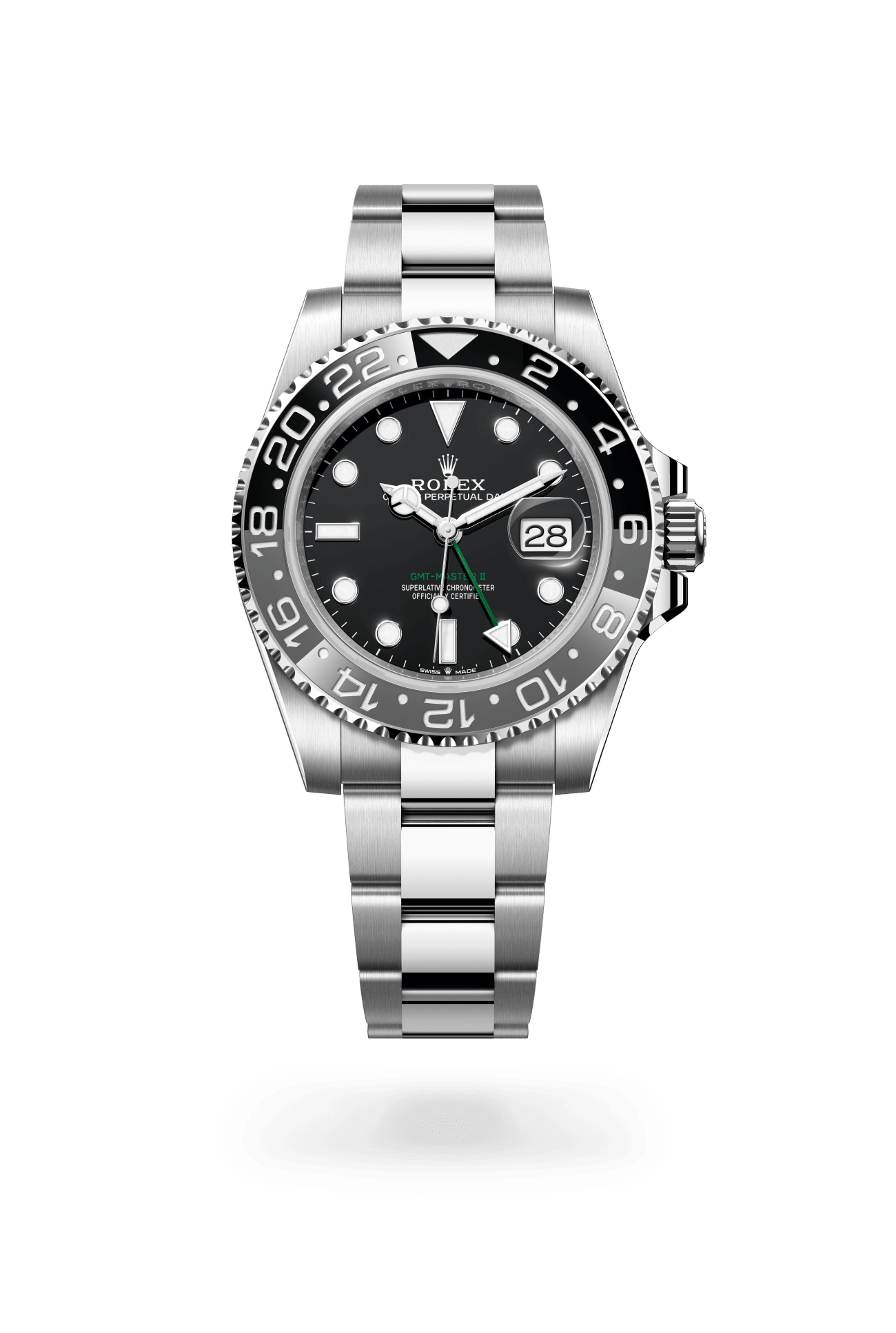
Rolex Day-Date 40 vs Rolex GMT-Master II
Ref. M228349RBR-0003 vs Ref. M126710GRNR-0004
Comparing the Rolex GMT-Master II to the Rolex Day-Date 40 means weighing a significant price difference — is the premium justified? At $71,200 versus $12,350, these two watches serve different segments of the market. Here's how they stack up on specifications, value retention, and investment potential.
Price Comparison
Rolex
Day-Date 40
Rolex
GMT-Master II
At retail, the Rolex Day-Date 40 is listed at $71,200 while the Rolex GMT-Master II comes in at $12,350. The Rolex GMT-Master II comes in at $58,850 less — more than half the price difference — making it a significantly more accessible option. On the secondary market, the gap narrows: the Rolex Day-Date 40 trades around $74,760 and the Rolex GMT-Master II around $17,500, a difference of $57,260 favoring the Rolex GMT-Master II. Trading at 5% above retail and holding steady, this model holds its value well on the pre-owned market. The Rolex GMT-Master II commands an even stronger market premium of +41.7%, with upward momentum. For investors, the Rolex GMT-Master II edges ahead with a flip potential score of 7/10 compared to 5/10.
Specifications
| Specification | Rolex Day-Date 40 | Rolex GMT-Master II |
|---|---|---|
| Case Diameter | 40mm | 40mm |
| Case Thickness | 12.4mm | 13.1mm |
| Case Material | 18ct white gold | Oystersteel |
| Bezel | 18ct white gold, set with diamonds | Cerachrom (ceramic) in green and black |
| Crystal | Sapphire with Cyclops lens | Sapphire with Cyclops lens |
| Water Resistance | 100m / 330ft | 100m / 330ft |
| Movement | Rolex calibre 3255 | Rolex calibre 3285 |
| Movement Type | Automatic | Automatic |
| Power Reserve | 70 hours | 70 hours |
| Bracelet/Strap | President, three-piece semi-circular links | Jubilee, five-piece links |
| Clasp | Concealed folding Crownclasp | Oysterclasp with Easylink 5mm comfort extension |
| Lug Width | 20mm | 20mm |
Key specification differences stand out between these two: the Rolex Day-Date 40 uses 18ct white gold while the Rolex GMT-Master II opts for Oystersteel. With 4 notable spec differences in total, the choice depends on which features matter most to your use case.
Value Per Feature
Per millimeter of case diameter, the Rolex Day-Date 40 costs $1,869 versus $438 for the Rolex GMT-Master II. For water resistance, the Rolex GMT-Master II delivers better value per meter of depth rating. The Rolex GMT-Master II offers more power reserve per dollar spent.
Which Should You Buy?
Choose the Rolex Day-Date 40 if you value the Rolex heritage. Go with the Rolex GMT-Master II if you prioritize a lower entry price, stronger flip potential, better value retention. For pure investment potential, the Rolex GMT-Master II has the edge based on current market data.
Frequently Asked Questions
Which is more affordable, the Rolex Day-Date 40 or the Rolex GMT-Master II?
The Rolex GMT-Master II is more accessible, priced at $12,350 compared to $71,200.
Which watch is a better investment?
Based on current market data, the Rolex GMT-Master II has a higher flip potential score of 7/10, suggesting stronger investment returns. However, watch values can fluctuate based on market conditions.
Which holds its value better on the secondary market?
The Rolex GMT-Master II currently trades at 41.7% above retail, indicating strong value retention on the pre-owned market.
How do the Rolex Day-Date 40 and Rolex GMT-Master II compare in size?
The Rolex Day-Date 40 measures 40mm in diameter and 12.4mm thick, while the Rolex GMT-Master II is 40mm by 13.1mm.
What movements do these watches use?
The Rolex Day-Date 40 uses the Rolex calibre 3255 with 70 hours power reserve, while the Rolex GMT-Master II runs on the Rolex calibre 3285 offering 70 hours of power reserve.