
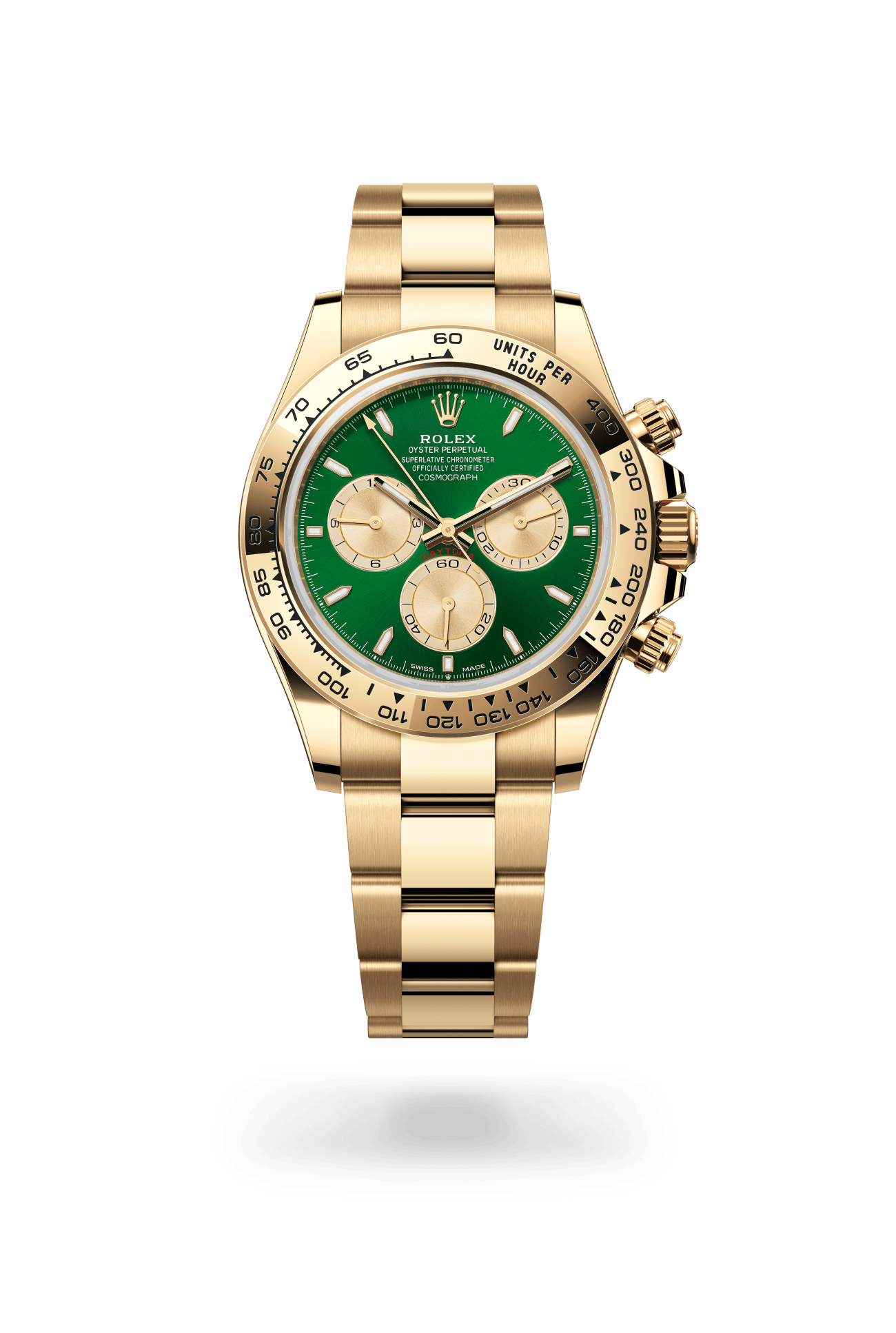
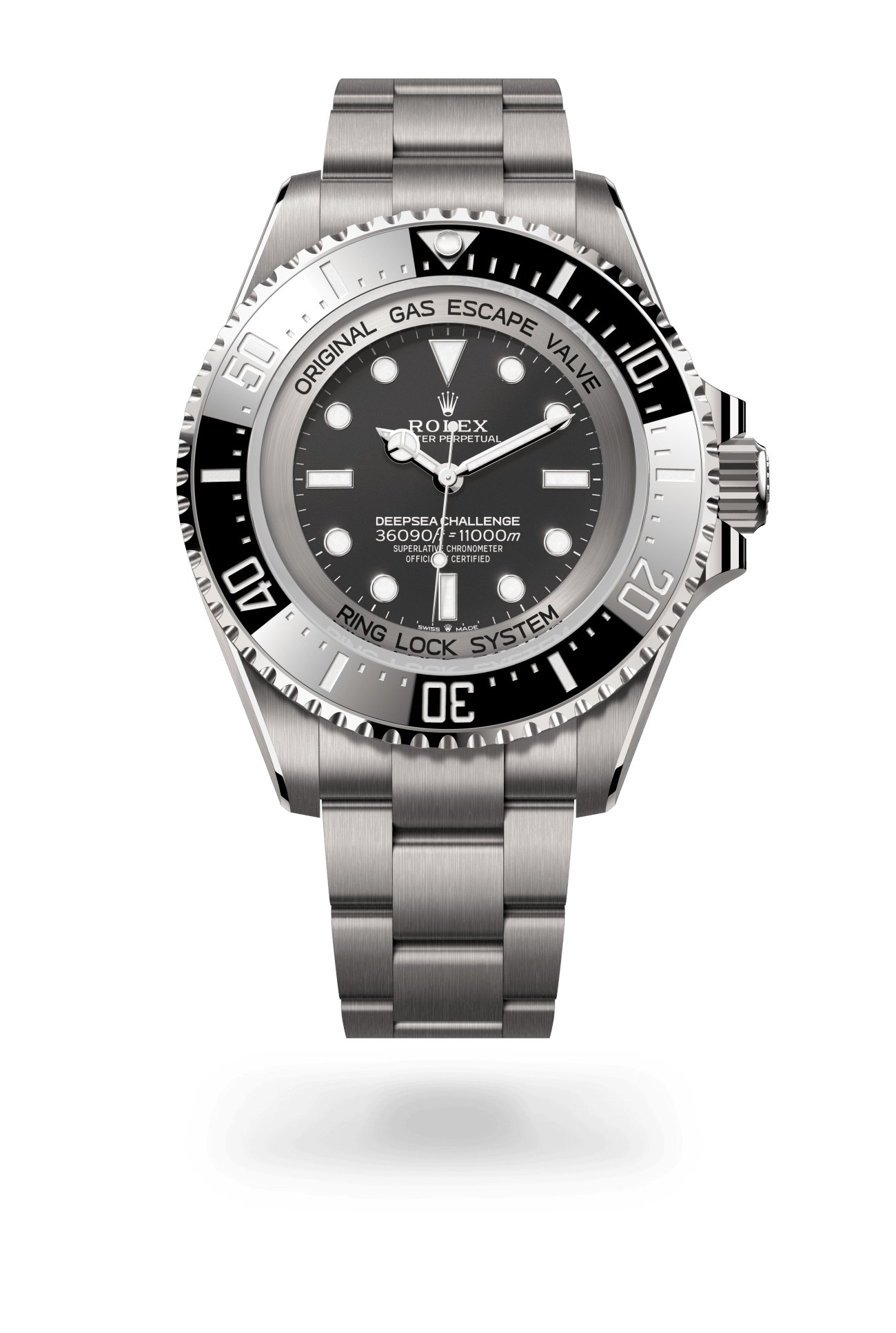
Rolex Cosmograph Daytona vs Rolex Deepsea Challenge
Ref. M126508-0008 vs Ref. M126067-0001
The Rolex Cosmograph Daytona and Rolex Deepsea Challenge both carry the Rolex name but serve different purposes — the Rolex Cosmograph Daytona as a chronograph and the Rolex Deepsea Challenge as a dive watch. At $39,800 and $26,000 respectively, the question isn't which is better — it's which better fits your collection and investment goals.
Price Comparison
Rolex
Cosmograph Daytona
Rolex
Deepsea Challenge
At retail, the Rolex Cosmograph Daytona is listed at $39,800 while the Rolex Deepsea Challenge comes in at $26,000. At $13,800 less (53% savings), the Rolex Deepsea Challenge offers a substantially lower entry point. On the secondary market, the gap widens: the Rolex Cosmograph Daytona trades around $71,640 and the Rolex Deepsea Challenge around $29,900, a difference of $41,740 favoring the Rolex Deepsea Challenge. This watch trades at 80% above retail on the secondary market and is trending upward — a strong indicator of collector demand. The Rolex Deepsea Challenge also shows a healthy market premium of +15.0%, holding steady. For investors, the Rolex Cosmograph Daytona edges ahead with a flip potential score of 8/10 compared to 5/10.
Specifications
| Specification | Rolex Cosmograph Daytona | Rolex Deepsea Challenge |
|---|---|---|
| Case Diameter | 40mm | 50mm |
| Case Thickness | 12.2mm | 23.0mm |
| Case Material | 18ct yellow gold | RLX titanium |
| Bezel | Cerachrom (ceramic) in black with tachymetric scale | Cerachrom (ceramic) in black |
| Crystal | Sapphire | Sapphire, 9.5mm thick |
| Water Resistance | 100m / 330ft | 11000m / 36090ft |
| Movement | Rolex calibre 4131 | Rolex calibre 3230 |
| Movement Type | Automatic | Automatic |
| Power Reserve | 72 hours | 70 hours |
| Bracelet/Strap | Oyster, three-piece solid links in 18ct yellow gold | Oyster, three-piece solid links in RLX titanium |
| Clasp | Oysterlock safety clasp with Easylink 5mm comfort extension | Oysterlock safety clasp with Fliplock extension and Glidelock extension system |
| Lug Width | 20mm | 22mm |
Key specification differences stand out between these two: The Rolex Deepsea Challenge leads in water resistance (11000m / 36090ft vs. 100m / 330ft), and the Rolex Cosmograph Daytona offers longer power reserve at 72 hours, and the Rolex Cosmograph Daytona uses 18ct yellow gold while the Rolex Deepsea Challenge opts for RLX titanium. With 8 notable spec differences in total, the choice depends on which features matter most to your use case.
Value Per Feature
Per millimeter of case diameter, the Rolex Cosmograph Daytona costs $1,791 versus $598 for the Rolex Deepsea Challenge. For water resistance, the Rolex Deepsea Challenge delivers better value per meter of depth rating. The Rolex Deepsea Challenge offers more power reserve per dollar spent.
Which Should You Buy?
Choose the Rolex Cosmograph Daytona if you value stronger flip potential, better value retention, timing functionality. Go with the Rolex Deepsea Challenge if you prioritize a lower entry price, serious diving capabilities. For pure investment potential, the Rolex Cosmograph Daytona has the edge based on current market data.
Frequently Asked Questions
Which is more affordable, the Rolex Cosmograph Daytona or the Rolex Deepsea Challenge?
The Rolex Deepsea Challenge is more accessible, priced at $26,000 compared to $39,800.
Which watch is a better investment?
Based on current market data, the Rolex Cosmograph Daytona has a higher flip potential score of 8/10, suggesting stronger investment returns. However, watch values can fluctuate based on market conditions.
Which holds its value better on the secondary market?
The Rolex Cosmograph Daytona currently trades at 80.0% above retail, indicating strong value retention on the pre-owned market.
How do the Rolex Cosmograph Daytona and Rolex Deepsea Challenge compare in size?
The Rolex Cosmograph Daytona measures 40mm in diameter and 12.2mm thick, while the Rolex Deepsea Challenge is 50mm by 23.0mm. Water resistance differs too: 100m / 330ft versus 11000m / 36090ft.
What movements do these watches use?
The Rolex Cosmograph Daytona uses the Rolex calibre 4131 with 72 hours power reserve, while the Rolex Deepsea Challenge runs on the Rolex calibre 3230 offering 70 hours of power reserve.
Related Comparisons
Omega Speedmaster Moonwatch Anniversary Series Silver Snoopy Award
vs Rolex Cosmograph Daytona
Rolex Cosmograph Daytona
vs Tudor Heritage Black Bay Chrono
Omega Speedmaster Professional Moonwatch
vs Rolex Cosmograph Daytona
Rolex Deepsea Challenge
vs Tudor Submariner
Rolex Deepsea Challenge
vs Tudor Submariner
Rolex Deepsea Challenge
vs Tudor Heritage Black Bay